How Do You Know If a Post Is Going to Take Off? Here’s What Five Creators and the Data Have To Say
Five creators share how they know a post will take off. Daisy tracked Instagram videos for a year to find out when a post’s fate is really decided.

Every creator has a gut check for whether a post is going to take off. Some watch the first hour, some watch the comments, some wait two days before they decide anything. What they’re all tracking, whether they call it this or not, is velocity: how fast a video is picking up views.
We think about velocity a lot at Daisy. For our new research report, Velocity: Harnessing momentum to increase the odds on Instagram, we tracked Instagram videos hour by hour for a year to find out when a video’s fate becomes clear, and whether anything can change it. Before we published, we asked five creators how they know a post is taking off and their answers show how closely the people who live on these platforms watch velocity. Brands should be watching just as closely.
What we found, in short: a video’s trajectory on Instagram becomes visible much earlier than most teams expect, and once its momentum fades, it rarely comes back on its own. Download the full Velocity report for the exact timing, the three velocity zones every video falls into, and what changed when real creators stepped in to help videos along.
What is a post’s velocity?
Velocity is the rate a video gains views, measured in views per hour. A view count tells you where a video ended up. Velocity tells you what’s happening right now: whether distribution is accelerating, holding, or starting to decline.
That matters because of how Instagram decides who sees a post. Meta has described its ranking as something like an audition: a new post is shown first to a small audience likely to enjoy it, including people who don’t follow the account. If that audience engages, the post goes out to a bigger one. If they keep engaging, it keeps going.
Every post gets an audition, and it happens in the first hours after posting. Velocity is the clearest outside view of how that audition is going while it’s still underway, which is exactly why creators watch it so closely.
How creators read velocity
Ask a creator how a post is doing and you won’t get a view count. You’ll get a comparison.
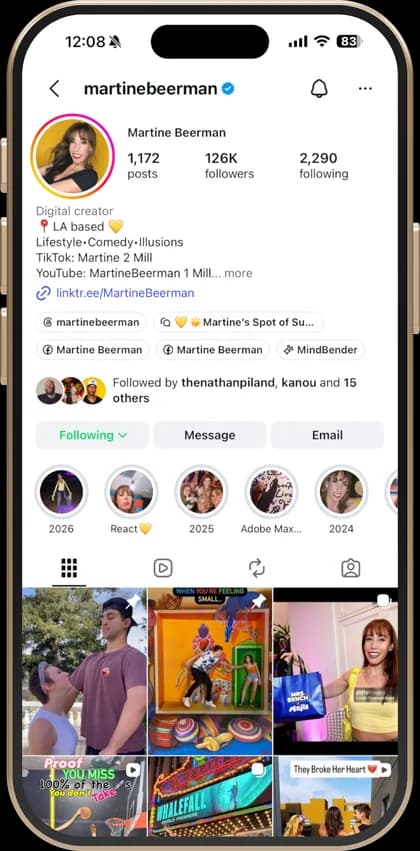
Digital creator, on-camera host, and illusionist Martine Beerman (@martinebeerman) puts it simply:
My philosophy on velocity is that virality is relative. Every platform, and even every account, has its own baseline and timeline.
 Martine BeermanDigital creator, on-camera host, and illusionist · @martinebeerman
A thousand views in an hour can be a breakout for one account and a quiet day for another. So creators measure each post against their own normal, and what they’re really watching is which direction it’s heading.
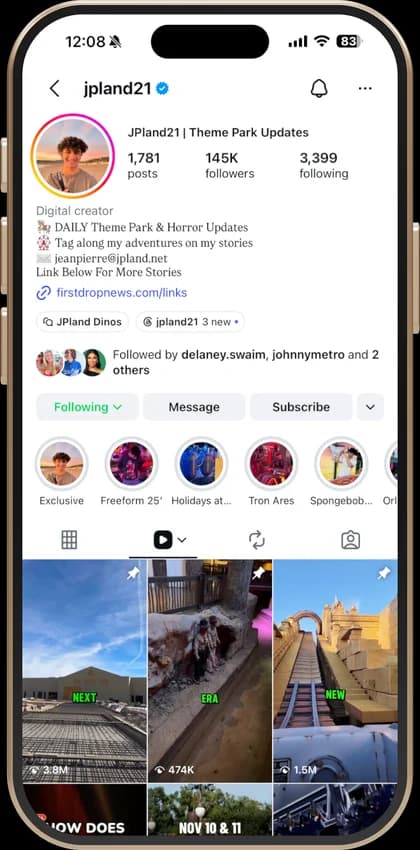
Theme park and horror culture creator JeanPierre Nalbantian (@jpland21) describes it this way:
My philosophy is that velocity isn’t just about how many views you get right after posting, but how quickly that momentum builds and whether it can sustain itself.
 JeanPierre NalbantianTheme park and horror culture creator · @jpland21
Building that momentum isn’t left entirely to chance. The best creators shape the first hours on purpose, because the early reaction is what decides how a post’s audition goes.
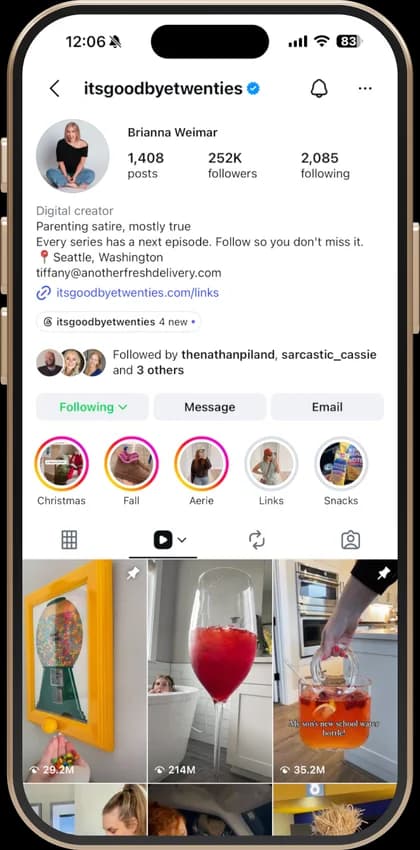
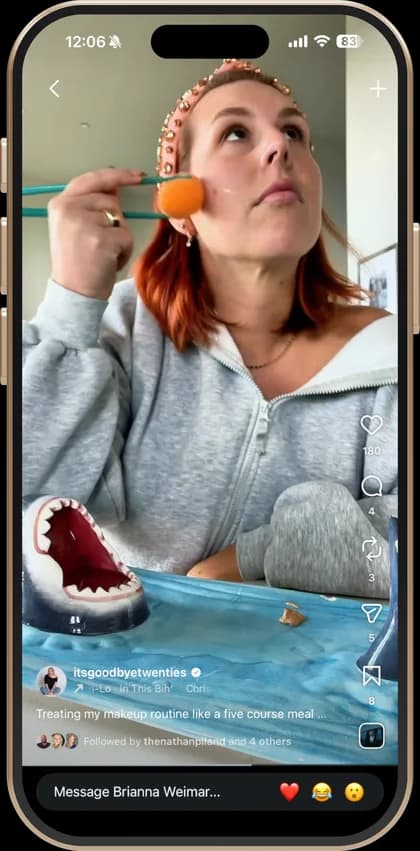
Parenting and comedy creator Bri Weimar (@itsgoodbyetwenties) designs for it:
I know a post is going to hit when people start coming for the comment section as much as the video. So I plant things on purpose to get them talking, like a little mistake, something weird in the background, or a word I mispronounce that people can’t resist correcting.
 Bri WeimarParenting and comedy creator · @itsgoodbyetwenties
What a post is about changes the clock, too.
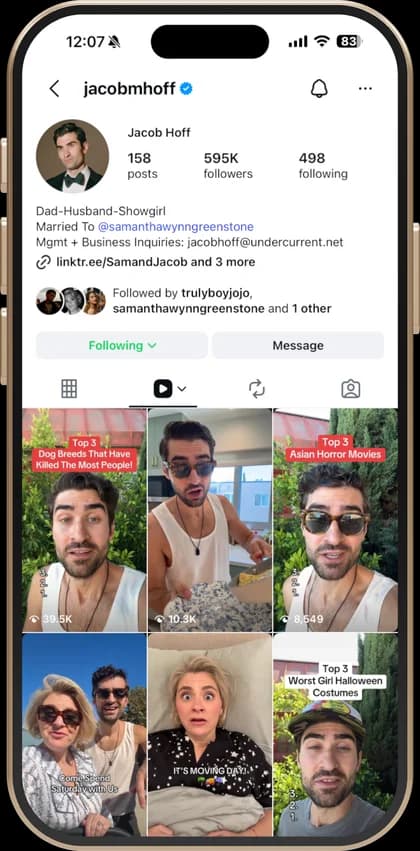
A news hook and an evergreen idea live very different lives, as relationships, dating, and culture creator Jacob Hoff (@jacobmhoff) has learned:
Topical videos (like a trending news story) tend to pick up views quick but don’t have longevity. Videos with really broad subjects (like the most common birthdays) tend to have a very wide audience and will continue to perform for weeks.
 Jacob HoffRelationships, dating, and culture creator · @jacobmhoff
And even for people who watch velocity every day, posts can still surprise them.
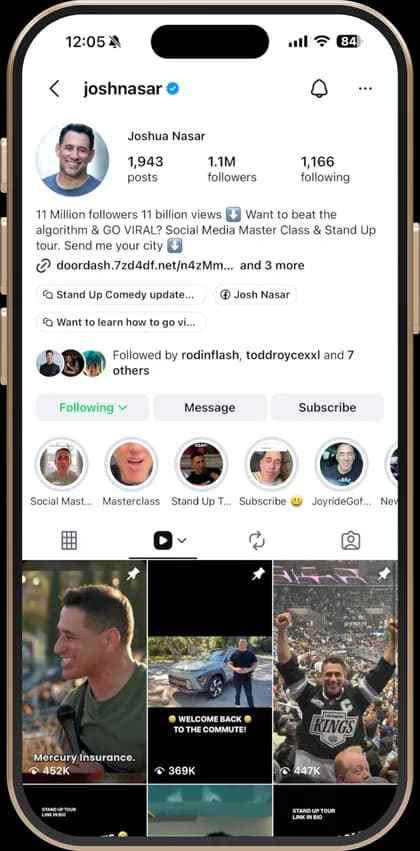
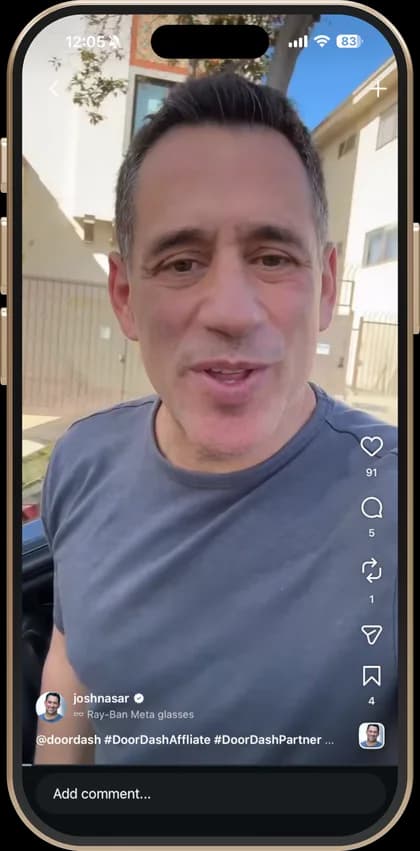
TV host, stand-up comedian, and actor Josh Nasar (@joshnasar) has seen them take the long way around:
A post may plateau at 5K-20K views for its entire first day, then suddenly gain significant traction 48 hours later.
 Josh NasarTV host, stand-up comedian, and actor · @joshnasar
That unpredictability is exactly why we wanted data behind the instinct. When we tracked Instagram videos hour by hour for a year, we found that the first day matters more than most teams realize, and that the signs of which posts are about to break away, and which are fading, show up sooner than you’d think. The Velocity report lays out exactly when.
Why brands should watch velocity like creators do
Creators check their posts hour by hour because their income depends on it. Most brand teams see video performance in a weekly report, and by the time that report arrives, most of a video’s views have already come in and its velocity is likely declining. Brands invest heavily in the creators, briefs, and production behind a video, then leave the part that decides its reach to chance.
The report lays out four changes brand teams can make, starting with when they begin measuring. It also sorts videos into three velocity zones based on how fast they’re moving early on, and each zone calls for a different response. One of them, the opportunity zone, is where brands have the most to gain.
From the Velocity report. Velocity rank at hour twelve, left to right.
Can you change a post’s velocity?
Yes. With Daisy, brands can bring in quality creators at scale to “boost” their published posts, acting on a post in the key hours while its velocity is still taking shape. When creators comment on, share, or repost a brand’s content, they put it in front of a new, like-minded audience.
Daisy compared boosted videos with matched unboosted videos, and found that boosted videos finished their first six days with 121% more views. The report shows how that happened, how quickly it started, and how boosting changed which zone videos landed in.
Strong ideas, credible creators, and content people want to watch still matter. But even great content only works if it’s seen, and velocity tells you, early enough to act, whether it will be.
Frequently asked questions
What is post velocity?
Post velocity is how fast a video gains views, measured in views per hour. Unlike a total view count, it shows whether a post’s distribution is accelerating, holding, or slowing down.
How long does it take to know if an Instagram Reel will take off?
Sooner than most teams expect. Daisy tracked Instagram videos hour by hour for a year and found that a video’s trajectory becomes visible within its first day. The Velocity report breaks down exactly when.
Can an Instagram post take off days after it’s posted?
It’s less common than it feels. In Daisy’s research, once an Instagram video’s velocity meaningfully slowed, it rarely recovered on its own. A post that’s still holding a steady pace can keep gaining views.
Does follower count decide how a post performs?
It gives a head start, but it isn’t destiny. In Daisy’s research, the advantage of a large account shrank among the fastest-moving videos. The report shows by how much.
How can brands increase a post’s velocity?
By acting during the first day, while a video’s trajectory is still taking shape. In Daisy’s research, videos that Daisy’s creator network shared, commented on, and reposted (what Daisy calls a “boost”) finished their first six days with 121% more views than matched unboosted videos.