How Movie Marketing Works When Everyone Has a Different FYP
Barbie had a reported $150M marketing budget. Most movies don’t. How studios can still make a moment on organic social when every fan has a different feed.
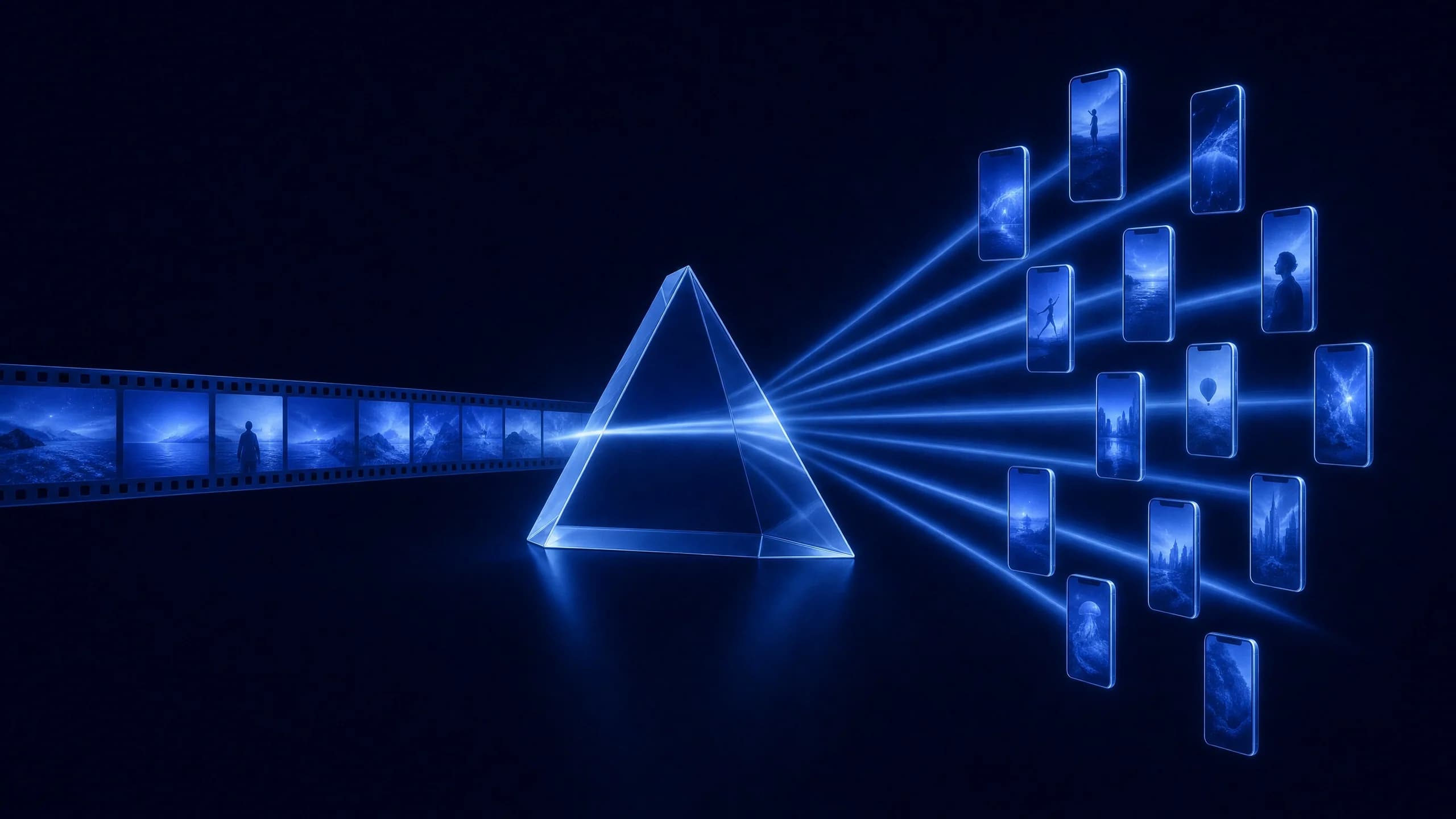
Try this: open TikTok, then swap phones with the person next to you and scroll theirs. The creators, jokes, and trends will be completely different from yours. You’re on the same app, but you’re seeing two different worlds.
That’s the end of monoculture in about 30 seconds. The Wall Street Journal recently dug into how we got here in “The Rise and Fall of the American Monoculture” by Ben Fritz. The line my team couldn’t stop talking about was how he describes YouTube:
Like TikTok and Instagram, its success is built on a sophisticated recommendation engine that delivers exactly the right content to you. And me. And everyone else.
What monoculture actually needs
The way I think about it, monoculture means everyone seeing and engaging with the same thing at the same time. Seeing it isn’t enough on its own. The engagement part, like the happy-hour debates, group chats, and memes, are what turns a show or trend into culture.
I think people actually miss and crave monoculture. We all want to connect, be in on the joke or the latest hot goss, and nobody wants to be the one person at brunch who hasn’t seen the episode or movie everyone’s dissecting. What went away wasn’t the desire for community, but the programming that delivered those moments: the Thursday-night TV lineup, the Friday-night midnight movie release, or the radio countdown everyone heard on the way to school.
The personal algorithm seems like it works against shared moments. It’s built to keep you in your lane, because your lane is where you keep scrolling. My FYP and my brother’s FYP have never met. (Let’s be real, they don’t even live in the same universe.) When something does break out of its lane, it’s usually because enough people in enough different lanes engaged with it at the same time.
That should change how marketers plan. Monoculture used to work from the top down: a gatekeeper picked the thing and pushed it to everyone. Today, a moment spreads sideways, from one community to the next, until it feels like it’s everywhere.
What this means for your movie marketing strategy
This is the part that keeps movie marketers up at night. A tentpole release still needs everyone talking about it the same weekend, and a new song still needs to feel like it’s everywhere at once. The old playbook (blanket TV, radio, and billboards for a month and wait) doesn’t work when everyone is watching something different.
Donna Langley, chairman of NBCUniversal Entertainment, put it this way in the WSJ piece:
I think there’s an audience out there with a real appetite for stories, events, and experiences tailored specifically to them. And it has to feel authentic, or they’re not coming.
This is where brands get mixed up in the content creation step. “Tailored” and “authentic” don’t have to mean a different story for every audience. Studios and brands don’t need a hundred versions of the trailer. They need the same trailer to show up through a hundred different voices that each audience already trusts, so the thing you tailor is who delivers it.
Now you need one message to reach multiple audiences, across every channel (even the channels you didn’t know existed), and it has to feel like it was made for each of them. The big agencies are working on this exact problem for their clients, trying to rebuild some version of monocultural distribution.
What the Barbie marketing strategy actually cost
For me, the closest we’ve gotten to a true monocultural moment in the last few years is probably “Barbie.” For one summer, everything was pink: your feed, your group chat, the aisle at Target, and your mom’s Facebook. Everyone saw it, and everyone talked about it.
That didn’t happen by accident. Rival studios estimated the marketing budget at around $150 million, roughly what it cost to make the movie, and that doesn’t count all the brand partners paying for their own Barbie tie-ins. It was paid media on paid media on paid media.
So a monocultural moment is still possible, but it’s very expensive, because you’re paying to push the same message into millions of different feeds one ad at a time. Most brands and most movies don’t have a Barbie budget.
Where creators come in
If the algorithm splits everyone into their own feed, the people who show up across all of those feeds are creators.
Every creator is the center of their own audience. Their followers trust them, watch them, and engage with what they share, and the algorithm already favors them. Put enough of them together and you can reach a lot of different lanes at once.
That’s what Daisy does. Instead of asking one creator to make one video for one audience, a brand or studio takes the asset it already made and puts its fate in the hands of dozens of creators at once. Each creator shares it, comments on it, or reposts it to their audience. Boom: the same message lands in thousands of different feeds in the same few hours, and every time, it shows up through someone that audience already trusts.
It’s one message to multiple audiences, across organic social on Instagram, TikTok, and YouTube. I think that’s a big part of why studios love Daisy: it gives them back some control over their distribution.
The more creators you get sharing and interacting with one asset, the closer you get to that “it’s everywhere” feeling, without a Barbie budget. Our feed data can also help us spot what’s breaking through across communities, so we can tell what’s actually trending versus what’s only trending in your corner of the internet.
What I’d tell anyone launching something right now
If you’re a studio, a label, or a brand trying to make your next launch feel like a moment, here’s where I’d start.
Plan around people, not channels. No single channel reaches everyone anymore, but the right mix of creators can get you into a lot of different feeds.
Treat the first few hours as the release. The algorithm decides early whether something gets out of its lane. Our research found that by hour three, early performance already predicts at least 80% of where a video ends up by day six. If you want something to spread across communities, it needs to start moving right away.
Don’t make more content, distribute the content you have. You don’t need a different asset for every audience. You need the right asset in front of more of them, faster.
Look at where the views came from. A million views from one community and a million views spread across ten communities are very different results. The second one is how a moment starts.
The moment is still the goal
The monoculture isn’t coming back, and some of that is good. Having a handful of people decide what everyone gets to watch and hear wasn’t great either.
But that feeling of everyone seeing and talking about the same thing at the same time is still what every launch is going for. You just can’t get there with one big paid media plan anymore. You get there by reaching each feed through the creators people already follow on organic social, in the first few hours that decide whether anything takes off. (The data on those first few hours is in our velocity report.)
Want your next launch to feel like it’s everywhere? Book a demo and we’ll show you how. And if you’re a creator who wants to get paid with your camera off, download the Daisy app and start boosting.